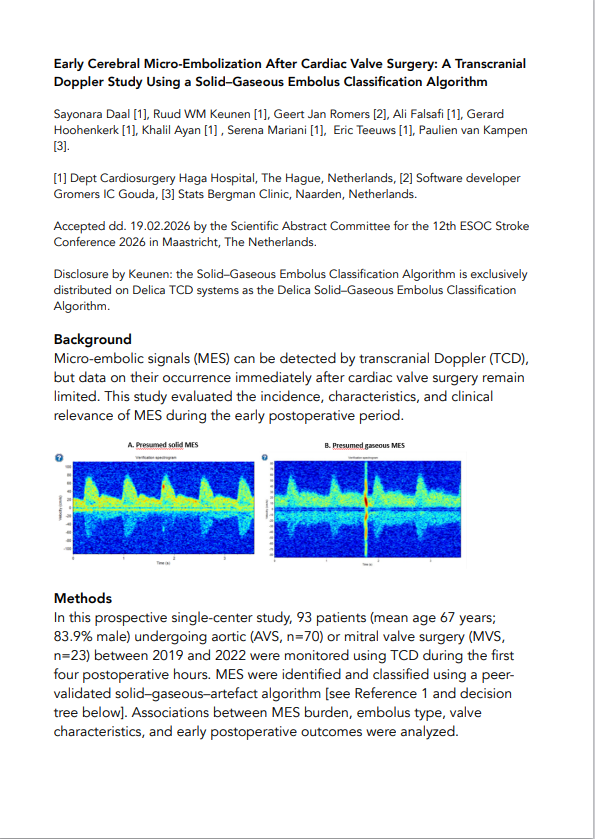
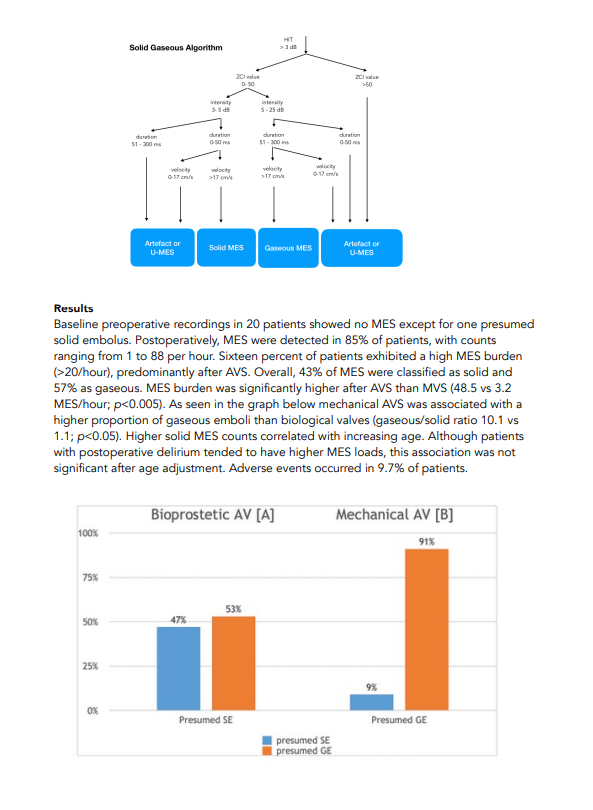
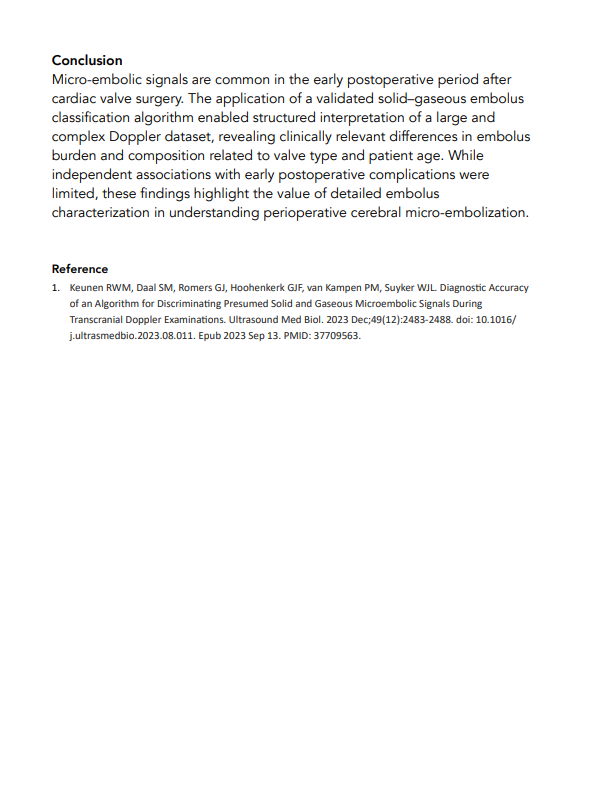
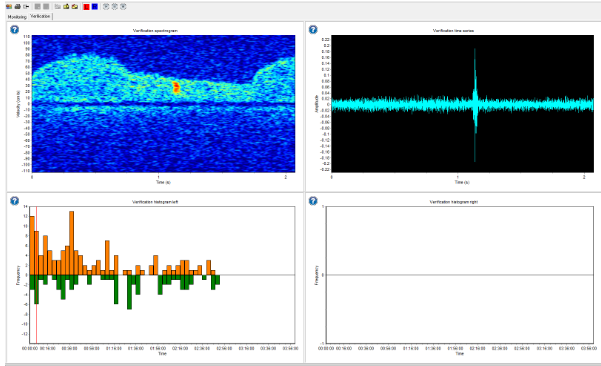
Considerable time and effort were invested in conducting this TCD study in more than 90 patients during the first hours following heart valve surgery. The investigators were very pleased to find that the SGA algorithm was able to reliably differentiate between gaseous and solid particles among thousands of HITS. This was particularly evident in the differences observed between mechanical heart valves—where a high number of gaseous particles is expected—and biological heart valves, where the ratio of gaseous to solid particles was nearly equal.
These findings demonstrate that the peer-reviewed Delica solid and gaseous particle differentiation algorithm can make an important contribution to the epidemiology of cerebral embolism in complex medical and surgical procedures, also in routine clinical practice.